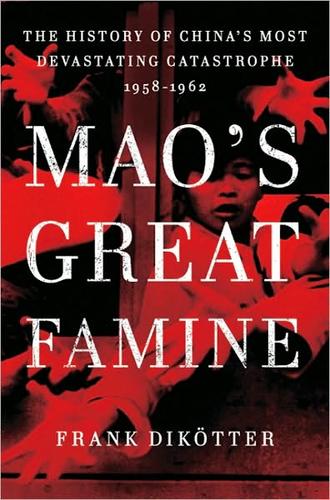
Mao's Great Famine: The History of China's Most Devastating Catastrophe, 1958–1962
by Frank Dikötter
Approximately 434 pages
This book provides a thorough examination of a tragic period in Chinese history.
Difficulty
Moderate
Pace
Medium
Mood
scholarly, informative
Book club
High
Is this book for you?
Read this if you enjoy
- detailed historical accounts
- you are interested in political analysis
- you seek to understand the impact of government policies
Consider another book if
- you prefer narrative fiction
- you are looking for light reading
What it is about
"Mao's Great Famine" examines the catastrophic consequences of China's Great Leap Forward from 1958 to 1962. Frank Dikötter argues that the policies implemented during this period led to widespread famine and suffering. The book highlights the role of government propaganda in obscuring the reality of the crisis.
Dikötter provides evidence of the scale of starvation, estimating millions of deaths. He discusses the impact of collectivization and agricultural mismanagement on food production. The author critiques the leadership's refusal to acknowledge the crisis.
He explores the social and political dynamics that exacerbated the famine. The narrative incorporates personal testimonies and archival research. Dikötter emphasizes the long-term effects of the famine on Chinese society.
The work contributes to the understanding of Maoist policies and their human cost.
Award recognition
2011 winner
Baillie Gifford Prize for Non-Fiction
United Kingdom
Reader comments
Loading comments…
Similar award-winning books
Selected from shared categories, regions, award history, and reading profiles.

One Woman’s War
by Eileen Younghusband
Also recognised in non fiction.

The Pike: Gabriele D'Annunzio, Poet, Seducer and Preacher of War
by Lucy Hughes-Hallett
Also recognised in non fiction.

Behind the Rainbow
by Johan Bakker
Also recognised in non fiction.